
Solar cells: Oxford semiconductor holds on to charge – losses about 75% lower
Bismuth sulfide absorbs light strongly yet loses the charges it creates slowly. According to a study in "Nature", this sidesteps a long-standing trade-off in solar energy materials.
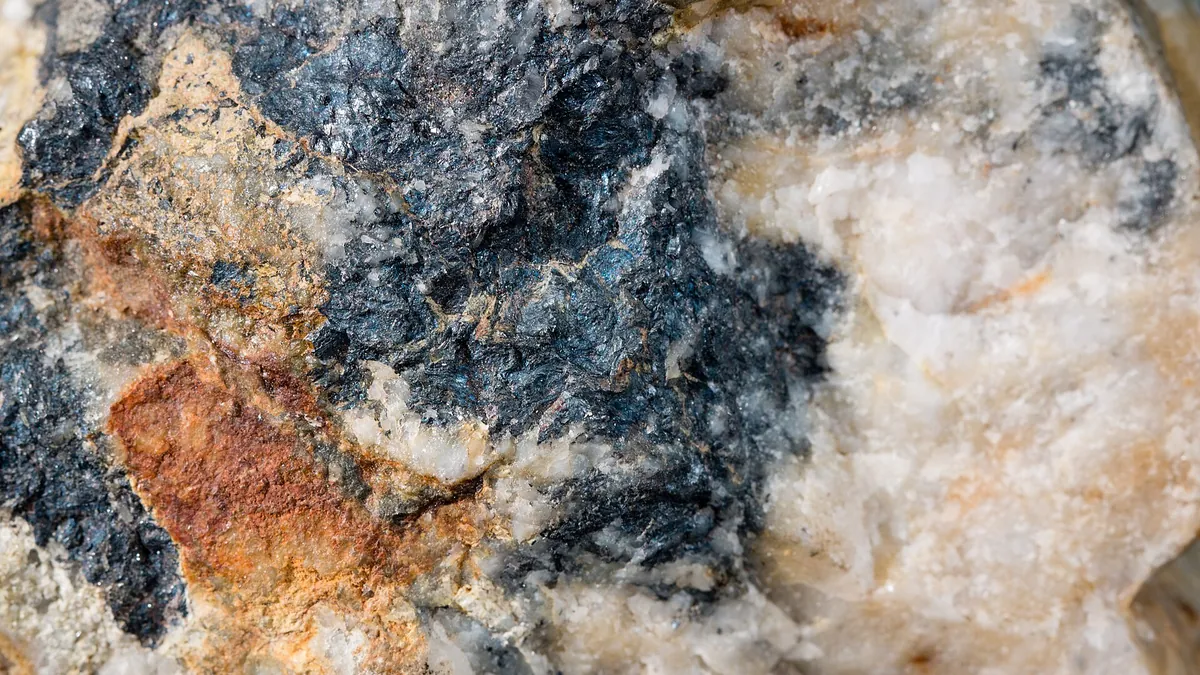
Symbolic image · Photo: USGS / Wikimedia Commons, Public domain (cropped and resized)
In solar cells, light frees electrons; electricity is only produced if they are collected before they recombine with the "holes" left behind. Ever since Gustav Kirchhoff showed in 1860 that a good absorber of light is also a good emitter, the rule has been that semiconductors which absorb light strongly usually lose their charges especially quickly. Perovskites absorb strongly but lose charges rapidly; silicon holds on to them for longer but absorbs much more weakly.
Physicists at the University of Oxford led by Laura Herz, working with colleagues at Wuhan University, have shown that bismuth sulfide sidesteps this trade-off. Thin films were excited with ultrashort laser pulses and measured with terahertz spectroscopy from room temperature to just above absolute zero. Just below the strong absorption route lies a second, weak route in which charges collect and are lost only slowly. Unlike in most semiconductors, the charges disappeared more slowly when the material was cooled. At room temperature, the team estimates the loss rate falls by about 75 percent compared with materials that absorb light as strongly. The study appeared in "Nature" on 28 October.
"Our work shows that this trade-off is not inevitable," says Herz. The researchers stress that they have demonstrated a physical mechanism, not a finished solar cell. Similar materials could be found by screening databases or engineered by stretching layered crystals. Funding came from the UK's EPSRC and the company Oxford PV, among others.