
Brain chip: EPFL implant reads the interplay of brain regions on under 200 microwatts
Measuring only about 4 x 2 millimetres, the LogSync chip gauges how synchronously brain regions work and is meant to enable targeted stimulation for psychiatric disorders.
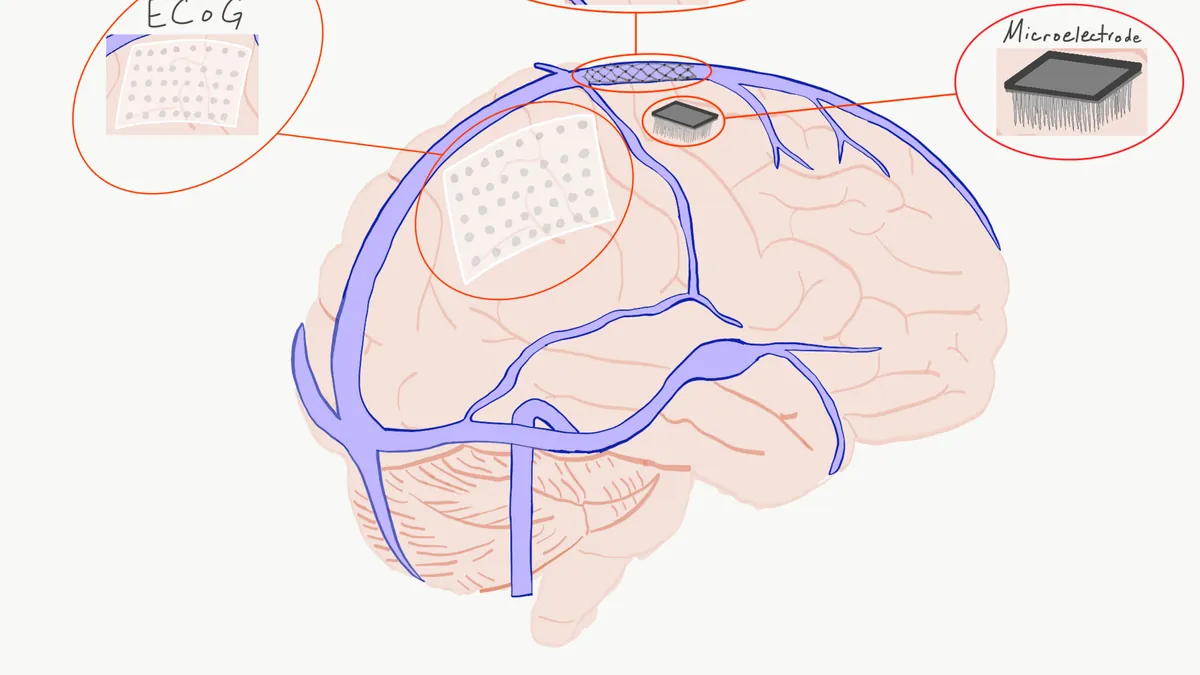
Symbolic image · Photo: Amcclanahan / Wikimedia Commons, CC BY-SA 4.0 (cropped and resized)
Researchers at EPFL's Integrated Neurotechnologies Lab led by Mahsa Shoaran have presented an implantable chip that analyses communication between brain regions. The system-on-chip, called LogSync, measures about 4 x 2 millimetres and consumes less than 200 microwatts. It records brain activity, computes the strength of brain oscillations and how synchronously different regions oscillate, classifies cognitive and emotional states from this and can generate stimulation triggers. To save computing effort, the chip uses logarithmic computations. The work appeared in the IEEE Journal of Solid-State Circuits.
The premise is that psychiatric disorders arise more from disrupted communication between brain regions than from a single region. "Our entire system is co-designed, meaning the algorithms and hardware are developed together with the constraints of implant in mind," says Shoaran. The chip was tested on human brain recordings from earlier psychiatric experiments – on cognitive engagement during a mental task and on emotional arousal while watching video clips. In rat experiments at the University of Minnesota, the implant triggered stimulation at predefined phases of brain activity.
Funding includes 6.6 million Swiss francs from the US National Institute of Mental Health. Shoaran also co-founded the EPFL spin-off Infera Neuro. According to EPFL, such interfaces are to be brought closer to clinical applications, including through Infera Neuro; the university gives no timeline.