
Impurities as an ingredient: researchers make better cast-iron alloys from pure scrap
Instead of diluting impurities in metal scrap with fresh iron, a machine-learning method uses them as alloying elements. The alloys became stronger or more ductile – and cheaper.
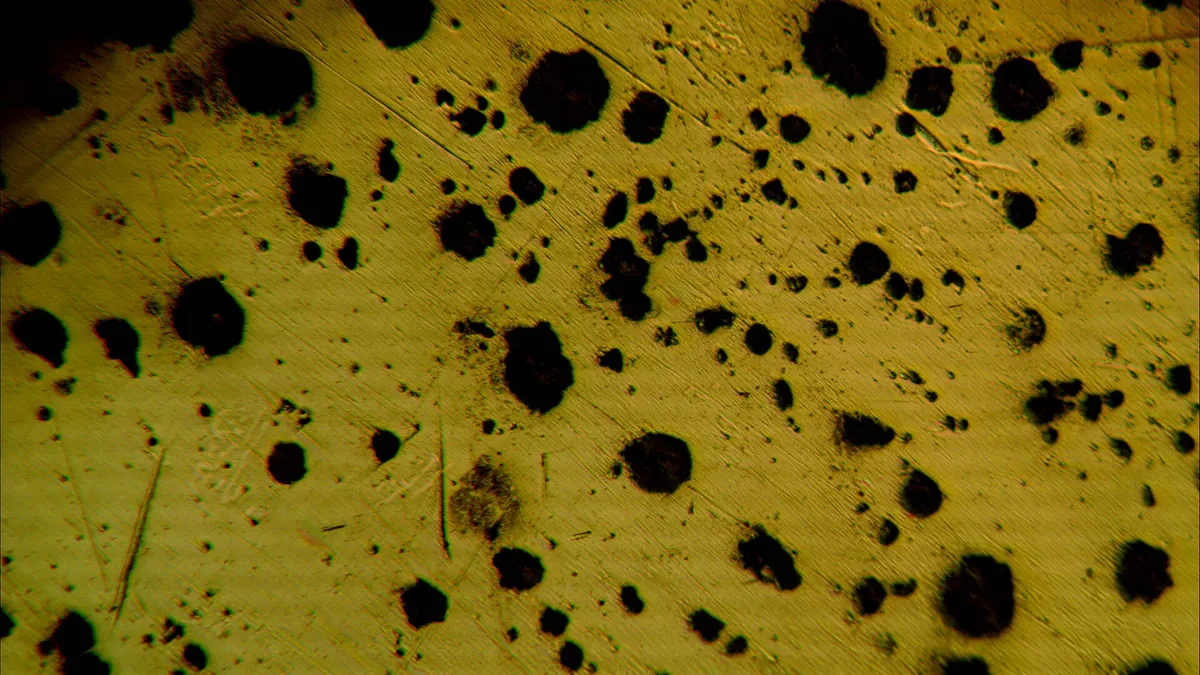
Symbolic image · Photo: Perlit86 / Wikimedia Commons, CC BY 4.0 (cropped and resized)
Around two billion tonnes of metal are produced worldwide every year; according to the Max Planck Institute for Sustainable Materials, metal production accounts for an estimated 40 percent of industrial greenhouse gas emissions and 10 percent of global energy consumption. More recycling would help, but scrap varies in composition and contains unwanted elements. So far these are usually diluted by adding fresh metal – which reduces the climate benefit.
A team from the institute and several Chinese universities, including Shanghai Jiao Tong University, turns this approach around: the impurities are used deliberately as alloy components. A machine-learning method links composition and processing, such as temperature and time, directly to tensile strength and ductility. A search algorithm generates new recipes, neural networks predict their properties, and the results of lab tests feed into the next round. The work was published in Science Advances (DOI 10.1126/sciadv.aeg9183).
The method was tested on ductile cast iron, of which around 120 million tonnes are produced each year. Of 17 proposed alloys, 14 achieved the best combinations of strength and ductility in the existing dataset for recycled iron: up to 15.2 percent higher tensile strength at comparable elongation, or up to 73.2 percent more elongation at fracture at comparable strength. Production was 8.1 percent cheaper than the usual route of blending scrap with fresh iron. In future the method could be extended to steel, aluminium and copper.