
Bubbles on command: Cornell chip creates and steers microbubbles with ultrasound
On a 3-millimetre area of a chip, gas bubbles form exactly where they are needed. Ultrasound makes them vibrate and thereby moves liquid in a targeted way.
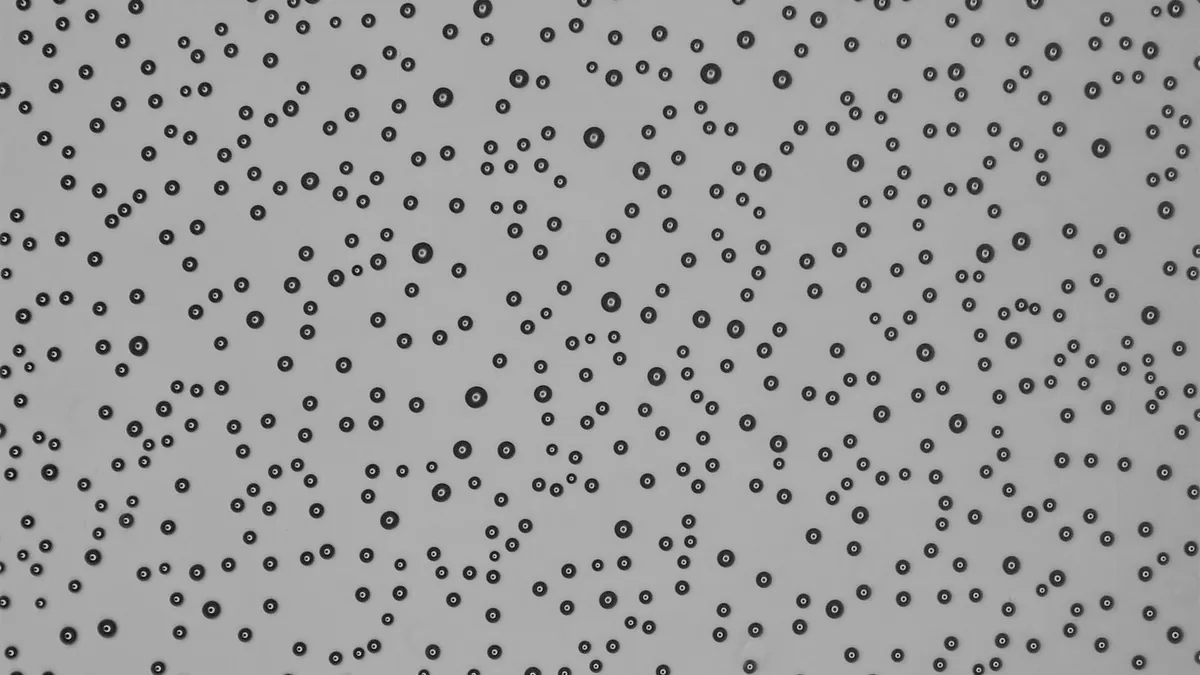
Symbolic image · Photo: Polorotyy / Wikimedia Commons, CC BY 4.0 (cropped and resized)
Researchers at Cornell University have developed a platform that creates and controls microbubbles on demand. On an area of about 3 millimetres on a chip, nine electrodes, each 6 micrometres in diameter, are arranged in a square. When a voltage is applied, hydrogen gas forms on them as bubbles 10 to 100 micrometres in size. The study led by physicist Itai Cohen with first author Zhiyuan Zhang appeared in the journal Science Advances on 14 October (DOI 10.1126/sciadv.aeg5408).
Ultrasound, at 40 kilohertz in one example, makes the bubbles vibrate so that they set the surrounding liquid in motion. Different arrangements create different flows: three bubbles in a row push the liquid from left to right, three on a diagonal towards the upper left, and five in an L-shape produce a curved flow. Because a bubble's size determines its resonant frequency, bubbles can be addressed selectively. At higher voltage a whole bubble cloud forms, which ultrasound can steer in a chosen direction.
The array makes it possible to control bubble size, number and position in real time, Zhang says. Because the bubbles are created where they are needed, the system needs no mechanical traps. The team names targeted drug delivery and bubble-powered microrobots as possible applications. The work was funded by the US National Science Foundation and the Army Research Office.