
Quantum computer checks itself: almost 5,000 checks on a chain of 100 qubits
Researchers from Rutgers and IBM had a quantum processor measure and reset itself almost 5,000 times – a step toward computers that correct their own errors.
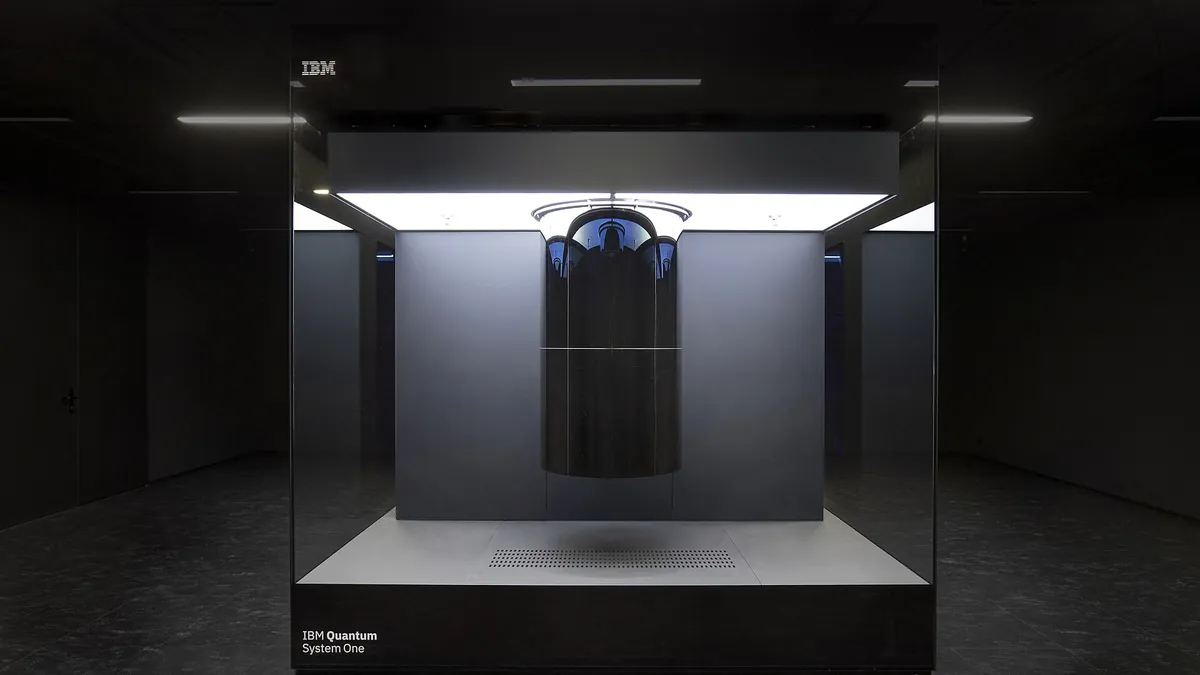
Symbolic image · Photo: IBM Research / Wikimedia Commons, CC BY 2.0 (cropped and resized)
For quantum computers to calculate reliably, they must continuously detect and fix their errors. A team from Rutgers University and IBM has now shown that today's hardware can perform such checks on a large scale. On a 156-qubit IBM Heron processor, the researchers used a connected chain of up to 100 qubits and carried out almost 5,000 two-qubit operations and almost 5,000 checks and resets. The study was published in the journal Nature Physics.
They observed an abrupt switch: at a roughly equal balance of scrambling and resetting steps, the system flipped from chaotic to controllable behaviour, which the researchers call a phase transition. When scrambling dominated, it stayed chaotic. The theory was tested on up to 100 qubits – conventional computers can simulate only about two dozen.
Such checks and corrections have to be made "not just once or twice, but a huge number of times during a calculation," says senior author Jedediah Pixley, a physics professor at Rutgers University. Senior author Maika Takita, a principal research scientist at IBM, stresses that present-day hardware can coordinate operations, measurements and resets thousands of times across a large system.