
Webb maps the edge of a distant planet: WASP-17b's atmosphere is lopsided
Using the James Webb telescope, researchers have mapped the shape of a hot gas giant's atmospheric edge all around the planet. On the evening side the atmosphere extends further out than in the morning.
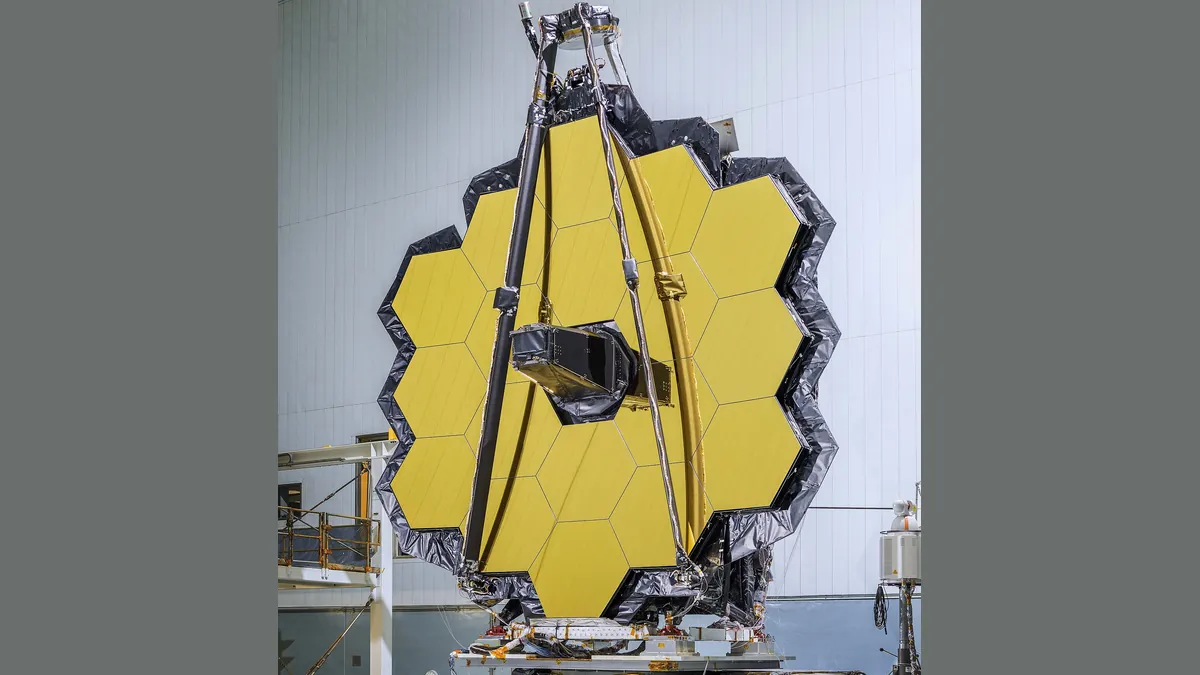
Symbolic image · Photo: Chris Gunn / Wikimedia Commons, CC BY 2.0 (cropped and resized)
Using the James Webb Space Telescope, researchers from Cornell University and the University of Bristol have measured the atmosphere of a distant planet in more detail than usual. They studied WASP-17b, a so-called hot Jupiter that orbits very close to its star about 1,300 light-years from Earth. The result: the atmosphere is lopsided. The planet's outline is roughly circular, but on the evening side the atmosphere extends further into space than on the morning side. The study was published in the journal Nature Astronomy.
This was made possible by a technique called 'transmission strings', developed by David Grant and Hannah Wakeford in Bristol. When a planet passes in front of its star, starlight shines through the edge of its atmosphere. Until now, this light was averaged over the whole edge; the new method separates the signals from different regions. Lead author Lili Alderson of Cornell University said the work is proof of concept that planets are in fact 3D objects.
The measurements match earlier predictions: winds carry heat from the permanently lit dayside to the dark nightside, so the morning and evening sides differ markedly. Hannah Wakeford described planets as temperamental, with complex and chaotic atmospheres. The observations were made in the TST DREAMS guaranteed time programme on Webb; the work was funded by NASA and the UK's research agency UKRI, among others. More than 6,000 exoplanets have been confirmed so far.