
Science study: tall ice cliffs break up faster – but no runaway collapse so far
More than 15,000 satellite measurements show that tall ice cliffs at the edges of ice sheets can break up faster than models assume. So far, the researchers found no self-reinforcing collapse.
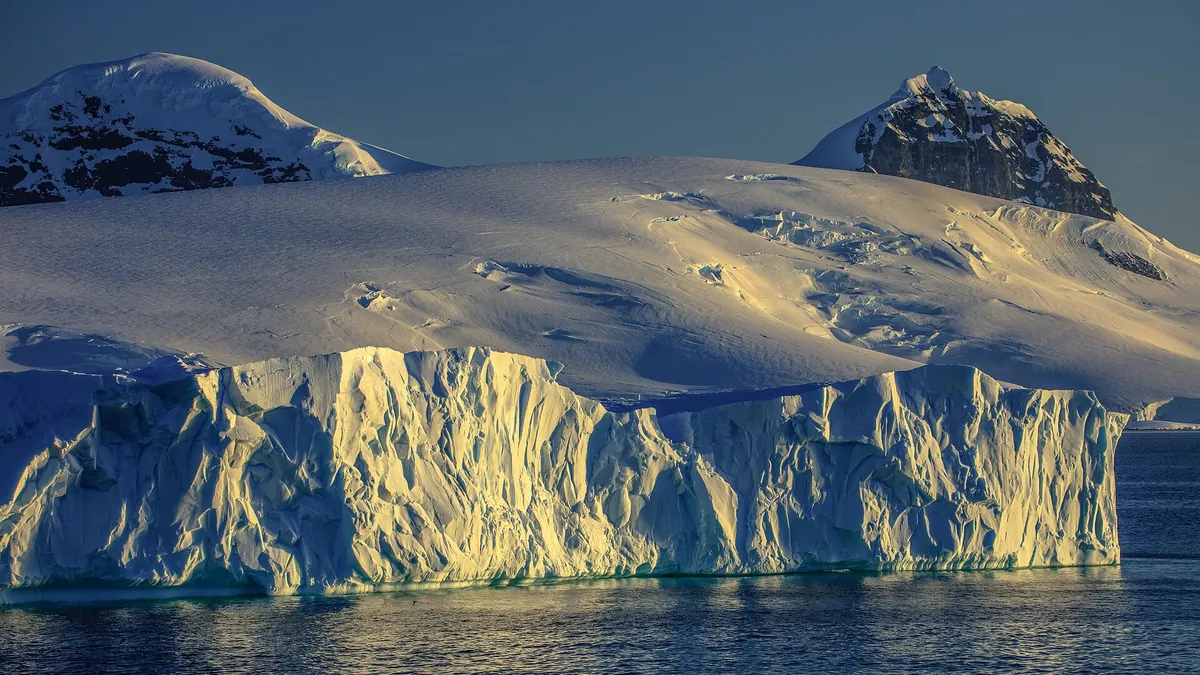
Symbolic image · Photo: Murray Foubister / Wikimedia Commons, CC BY-SA 2.0 (cropped and resized)
A team led by doctoral student Caroline Needell of the joint programme of MIT and the Woods Hole Oceanographic Institution (WHOI) has examined the behaviour of tall ice cliffs in what WHOI calls the most comprehensive observational analysis yet. The study “Empirical constraints on ice-cliff calving” was published on 15 October 2026 in the journal Science; WHOI glaciologist Catherine Walker and geophysicist Jeremy Bassis of the University of Michigan were also involved. The team analysed 15,330 measurements from the laser altimeter on NASA’s ICESat-2 satellite along the margins of the ice sheets, according to MIT from 2019 to 2023 and mainly in Antarctica. The researchers compared cliff heights with ice thickness, water depth, crevasses and calving rates.
The focus is the disputed hypothesis of marine ice-cliff instability (MICI). It holds that cliffs rising more than about 100 metres above the waterline could become unstable and trigger self-reinforcing ice loss – something never observed so far, which is why it was contested whether the process belongs in sea-level projections. The measurements show that cliffs are on average only about 30 metres high and only a few exceed 100 metres. In four regions with the tallest cliffs (up to 127 metres), they broke up faster than MICI models predict, but the retreat was short-lived and the glaciers re-stabilised. “We don’t see this runaway effect,” Needell said, according to MIT.
As braking factors, the authors name a thicker mix of icebergs and sea ice in front of the cliff (mélange), which may have a stabilising effect, deeper water that buoys the ice, and bumps in the bedrock. Tall cliffs also thin quickly as they break up and settle into lower, more stable forms. The work is based on observations and is not a new sea-level projection; it is meant to help test ice-sheet models, which in Needell’s words may underestimate how quickly tall cliffs break apart. Whether glaciers will re-stabilise under further warming is unknown, Bassis said, according to WHOI; so far, all known cases of rapid retreat have proved short-lived. According to WHOI, global sea level has risen by more than 20 centimetres since 1880.