
Aiming for 1 km range and 10-year batteries: Fraunhofer chip to boost sensor networks
Fraunhofer IPMS and TU Hamburg have developed a micromechanical amplifier for wake-up receivers, meant to let battery-powered sensors transmit farther while still lasting a long time.
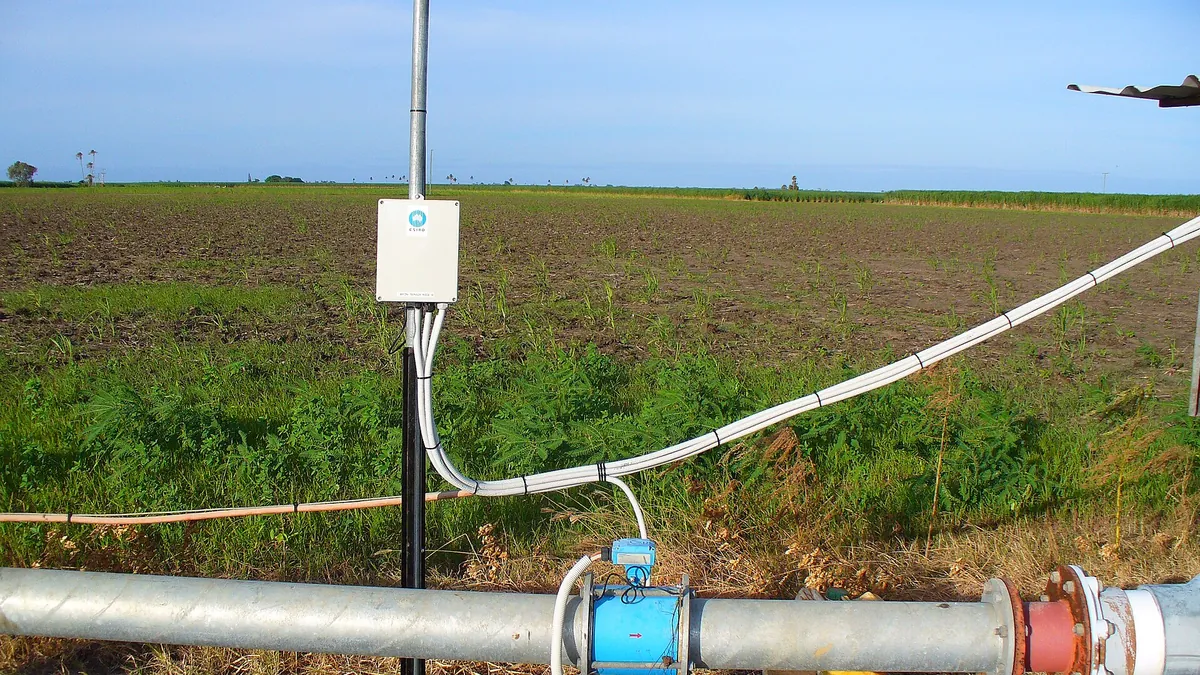
Symbolic image · Photo: Stephan Brosnan, CSIRO / Wikimedia Commons, CC BY 3.0 (cropped and resized)
Battery-powered wireless sensors that monitor equipment or buildings face a trade-off: long range costs energy. On Tuesday, the Fraunhofer Institute for Photonic Microsystems IPMS presented results from the MEMS-ParAmps project, which also involved TU Hamburg and the Lusatia-based application partner Actemium BEA. At its centre is a so-called wake-up receiver. It keeps a sensor node permanently ready to receive without switching on the main electronics and uses very little energy. Until now, however, its sensitivity has been limited – and so has its radio range.
The researchers therefore place a parametric amplifier based on micromechanical components (MEMS) in front of the receiver. Its core is a micromechanically tunable capacitor, a so-called varactor, excited with voltage pulses of about 3.3 microjoules. The targets are battery lifetimes of up to ten years and ranges of up to one kilometre in open terrain. Project lead Michael Stolz of Fraunhofer IPMS said that until now one had to choose between long range and long battery life, and that the new amplifier chip is meant to combine both.
According to the release, feasibility has so far been shown in theory and in simulations; the institute does not report field range measurements. The team also adapted an existing radio protocol for large distances between sensors. That was as decisive as the hardware itself, said Alexander Kölpin of TU Hamburg. The project was funded by the German Research Foundation (DFG) and the Fraunhofer-Gesellschaft and ran from October 2021 to January 2026.