
Tough at minus 253 degrees: new alloys do not turn brittle in extreme cold
Metals with a body-centred cubic lattice usually turn brittle in deep cold. A team led by Oxford and Berkeley reports in Nature two niobium-titanium-based alloys that stay tough even at 20 kelvin.
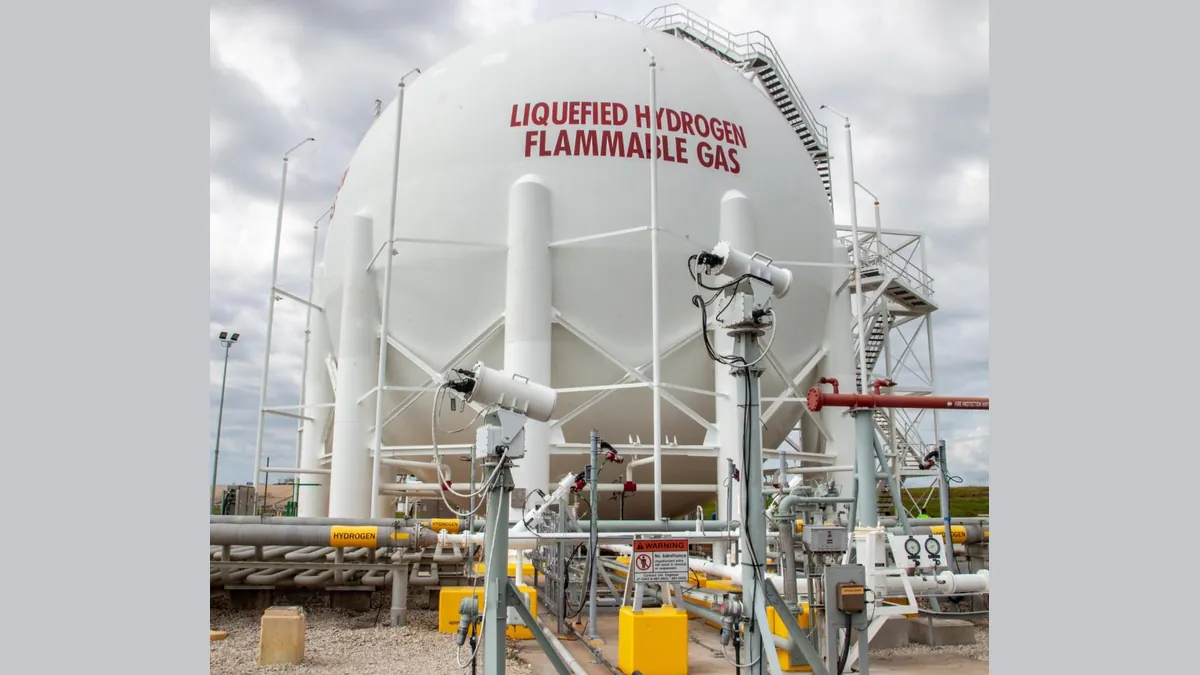
Symbolic image · Photo: DOE / Wikimedia Commons, Public domain (cropped and resized)
Many metals with a so-called body-centred cubic crystal lattice become brittle in extreme cold because dislocations – tiny defects in the crystal that make deformation possible in the first place – can barely move. A team led by the University of Oxford, the University of California, Berkeley, and Lawrence Berkeley National Laboratory has now studied two experimental alloys based on niobium and titanium that remained tough at 20 kelvin (minus 253 degrees Celsius). Even at the lowest temperature tested, they showed no measurable transition to brittle behaviour. The study was published in Nature (DOI 10.1038/s41586-026-11065-7); the release is dated 14 October.
The researchers trace this to processes at the nanoscale: twinning in the crystal and a local change in crystal structure create stress points at grain boundaries. New defects form there that allow the metal to keep deforming instead of cracking. Other participants included the University of Bristol, the ISIS Neutron and Muon Source, UC Irvine, Pacific Northwest National Laboratory, Texas A&M University and Nanyang Technological University.
According to the researchers, the results could help design metals for cryogenic applications in energy, transport and aerospace.