
Florida set to execute 77-year-old as polls show a divided country
William Reaves, 77, is scheduled to be executed Tuesday. Polls show a majority support the death penalty, but support is falling, and the debate has flared up again.
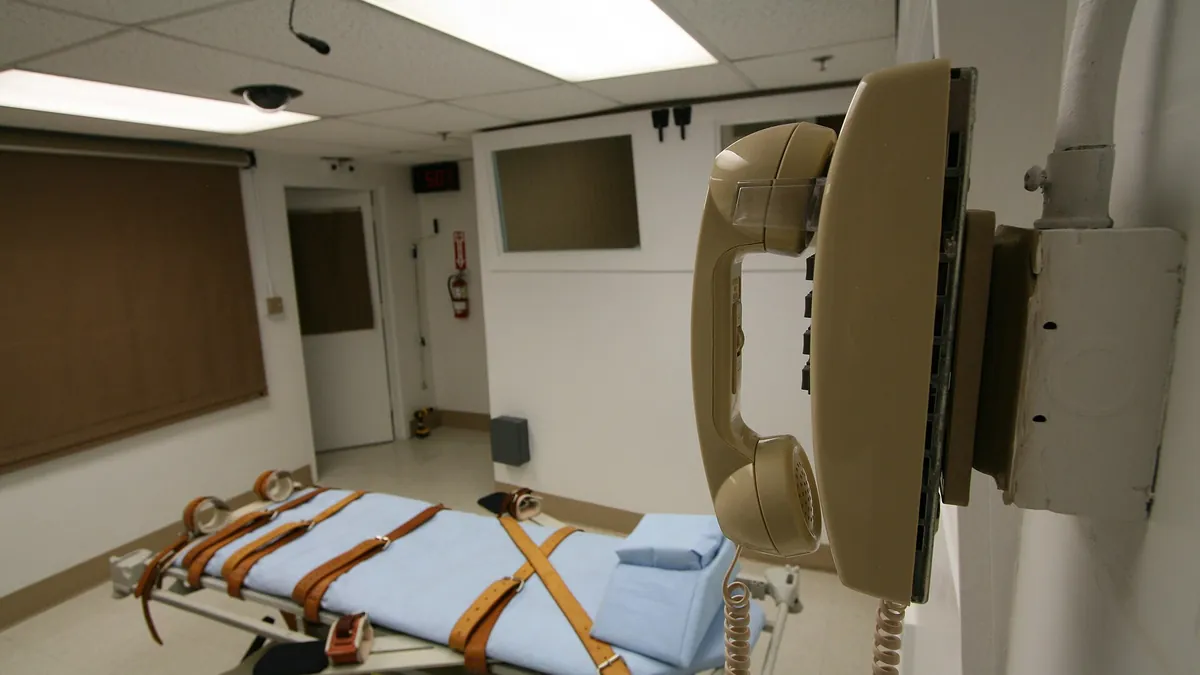
Symbolic image · Photo: Dept. of Corrections, Please provide photo credit to: Florida Department of Corrections/Doug Smith. / Wikimedia Commons, Public domain (cropped and resized)
Florida plans to execute 77-year-old William Reaves on Tuesday, Oct. 20, at 6 p.m. local time. He was convicted of fatally shooting 29-year-old sheriff's deputy Richard Raczkoski, who had responded to an emergency call, near Vero Beach in September 1986. The Florida Supreme Court on Oct. 14 unanimously rejected his final motions, including objections to the clemency process and the three-drug protocol. His family asked Gov. Ron DeSantis for clemency, citing his service in Vietnam and mental illness. It would be Florida's 18th execution this year.
According to an NPR tally, 31 people have been executed in six states so far in 2026, more than half of them in Florida; 27 states allow the death penalty. According to Pew, about two-thirds of Americans support it for murder, but 59% do not believe it has a deterrent effect. Gallup measured support at 52% in 2025, the lowest level in more than 50 years. According to Gallup, 60% prefer life imprisonment without parole. The debate was reignited by the case of Fort Hood gunman Nidal Hasan, whose execution is scheduled for December: according to ABC/Washington Post/Ipsos, 52% support it, while 80% oppose a live broadcast, which President Trump initially endorsed and then rejected.
Supporters such as Tennessee Gov. Bill Lee stress that the decision lies with citizens; the death penalty is "an appropriate punishment for the most heinous crimes," he said. He spoke after two failed execution attempts in Tennessee this year. Opponents point to wrongful convictions: Robin Maher of the Death Penalty Information Center cites 203 exonerations since 1972. "We don't know how many innocent people were executed before we learned of their claims," she said. Historian Daniel LaChance (Emory University) describes support as "a mile wide and an inch deep."