
Kruger National Park: Dead elephants shape the savanna years later
In South Africa's Kruger National Park, elephant carcasses leave nutrient-rich islands that attract impalas and buffalo for years, a new study in PNAS shows.
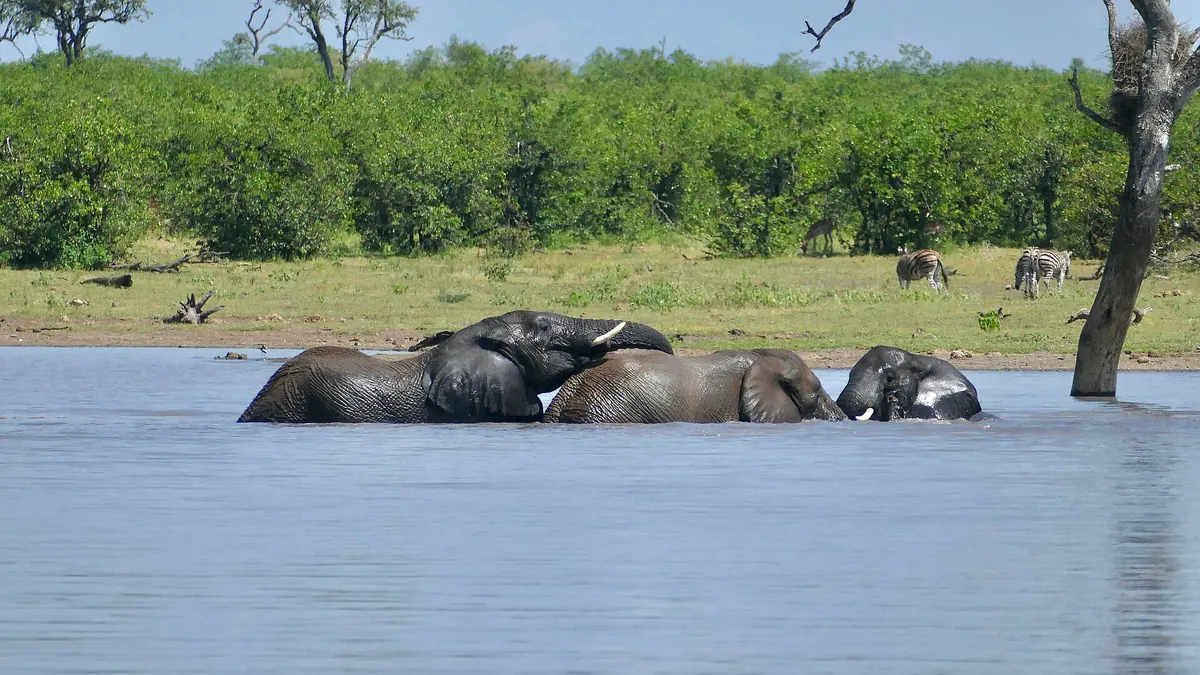
Symbolic image · Photo: Bernard DUPONT from FRANCE / Wikimedia Commons, CC BY-SA 2.0 (cropped and resized)
Open savanna and woodland characterize Kruger National Park in South Africa, where lions, hyenas and vultures roam alongside impalas and buffalo. According to a new study, around 30,000 elephants live there, and about 600 die each year. Researchers led by Courtney Reed and Deron Burkepile investigated what happens to their remains; the work was published on Oct. 12, 2026, in the journal PNAS.
The team examined 40 sites where adult elephants had died between eight days and almost eight years earlier. In the soil, it found on average around 31 times as much ammonium, seven times as much nitrate and three times as much phosphorus as in the surroundings, even at the oldest sites. The grass there contained about 1.5 times more nitrogen. Impalas and buffalo grazed at the carcass sites about three times as often as on comparison plots; cameras at eight locations recorded more than 24,000 animals.
At the same time, the diversity of plants and bacteria at the sites was lower. The researchers speak of biodiversity "coldspots" but "hotspots" of ecosystem processes. According to their extrapolation, around 4,000 carcasses could be shaping the landscape in the park at any given time, an indication of how strongly the gray giants help shape the savanna even after their death.
This article is for information only and is not legal, tax, financial or medical advice. Figures as of the date stated.