
Quantum computers for magnets and hydrogen: QuEra joins three U.S. research teams
In the U.S. Energy Department’s $37 million QC3 program, QuEra and partners are searching for superconductors, strong magnets and electrolysis methods that use less iridium.
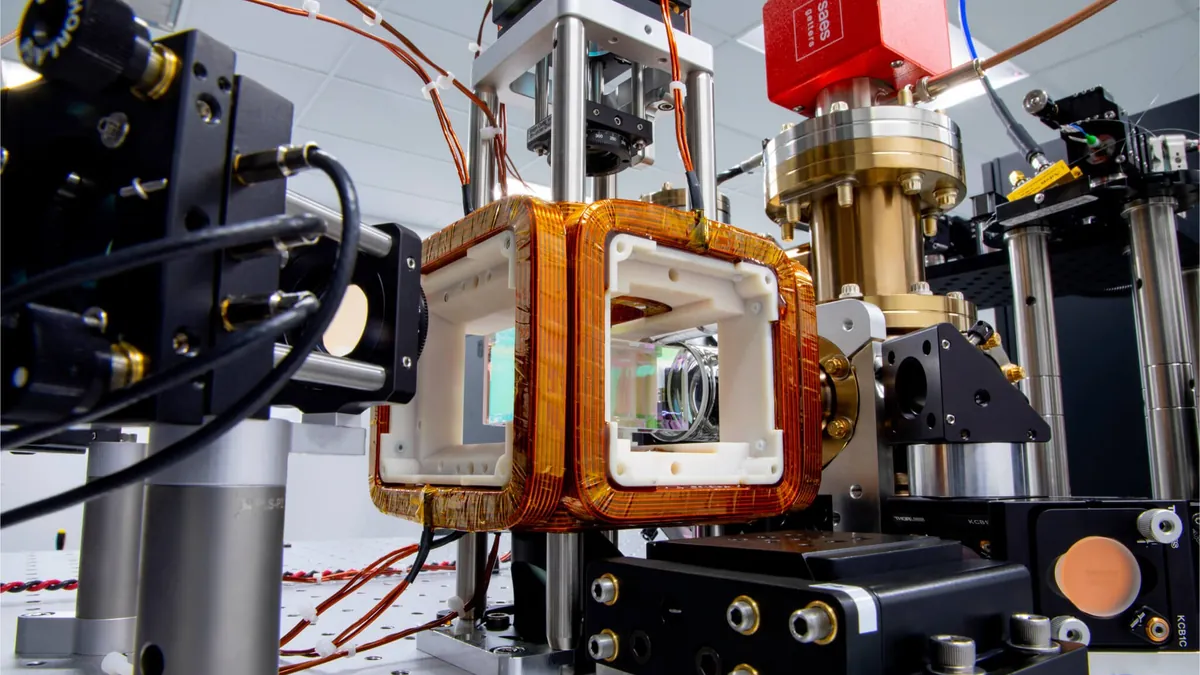
Symbolic image · Photo: QuEra Computing, Inc. / Wikimedia Commons, CC BY 4.0 (cropped and resized)
U.S. quantum computing company QuEra is involved in three of nine teams funded under the U.S. Energy Department’s “Quantum Computing for Computational Chemistry” (QC3) program, The Quantum Insider reported, citing a company announcement. The three-year program run by the research agency ARPA-E has a budget of $37 million. It aims to close the gap between what quantum computers will be able to do in the next few years and the computing resources that known chemistry algorithms require.
The requirements are ambitious: each team must identify an energy application involving one quadrillion BTU of energy or one gigaton of CO₂ equivalent and aim for a hundredfold improvement over the best classical method – verified at around 100 logical, or error-corrected, qubits. A team led by Lawrence Berkeley National Laboratory is searching for high-temperature superconductors, and a team around Lawrence Livermore National Laboratory for extremely strong, lightweight magnets for motors and generators.
The third project, led by the company Phasecraft with Johnson Matthey and Harvard University, simulates electrolysis for hydrogen production – primarily to require less of the rare metal iridium. QuEra contributes computers based on neutral atoms and aims to reach 1,000 logical qubits by 2029. “The earliest examples of quantum advantage will be the result of co-development across the entire application stack,” said Stefan Ostermann, director of quantum applications at QuEra.